Inside Our Client's Journey to $150K in Angel Funding and $42K MRR: The Work Behind It
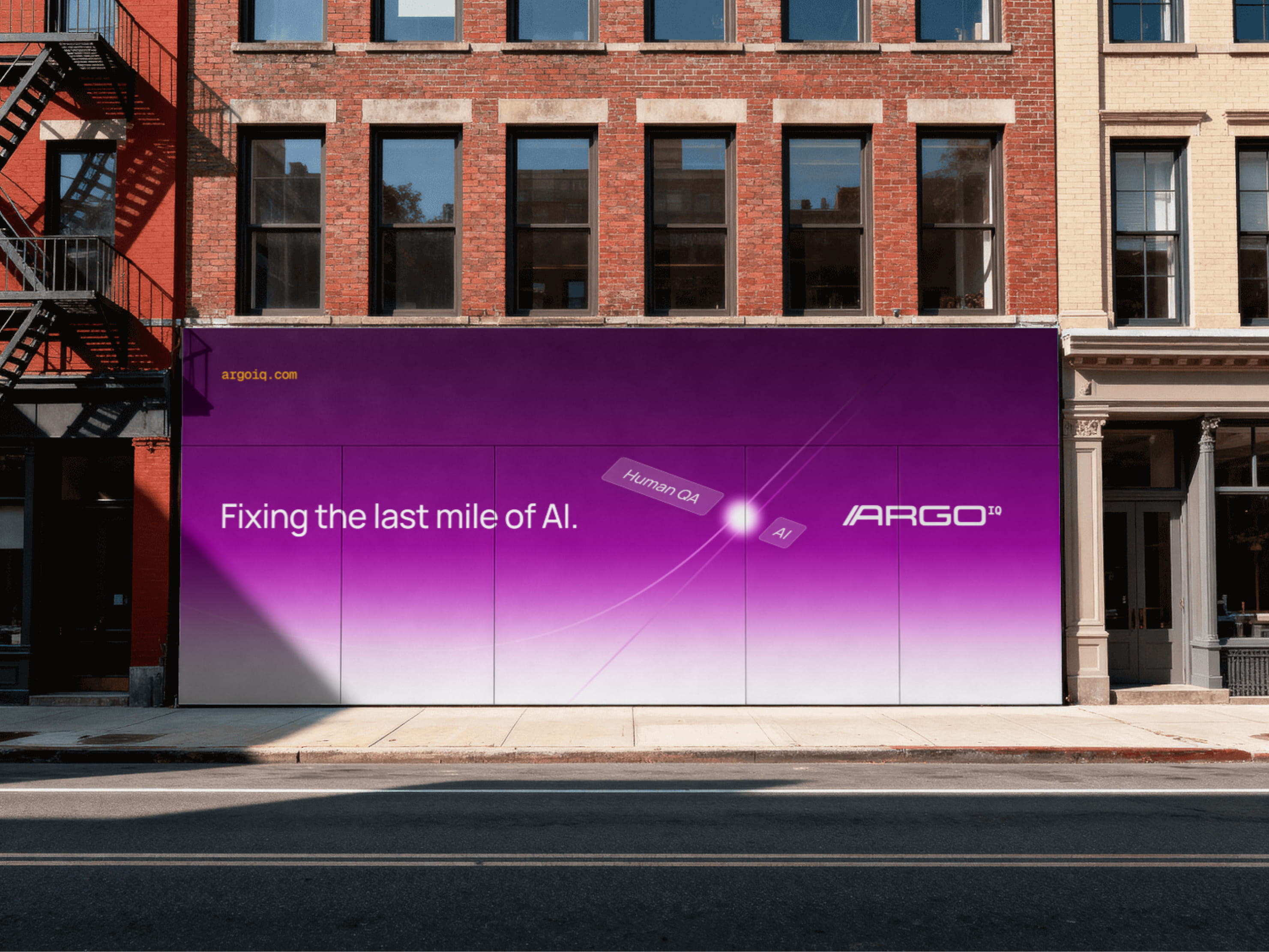
Here is the full behind-the-scenes of what we did with our client on their pre-seed journey, and how design started to look different sitting next to sales, pitching, and acquisitions.
The setup: Exited founders. Onto seemingly the next big thing. Investors on the calendar. Arguably, already ahead of 90% of "Startup" to begin with.
But every meeting starts with you explaining yourself instead of proving yourself. All you have is an abstract terminal workflow that doesn't hold anyone's attention.
That was my client's starting point too…
(Preview of where we landed)
July 2025: The brief looked simple
The client came in for a logo and landing page, but "You do not have a website problem, you have a branding and positioning problem in disguise." Those are the exact words I said on our intro call.
ArgoIQ was too technical and abstract. They are here to eliminate hallucination and stack layers of intelligence to make AI in business literally perfect.
They were missing the language and visual system to make people understand why this company should exist.
Keep in mind, this was way before Claude Cowork or Computer Use existed. The general public had no vision of how a chatbot could run their entire back office.
Week 1-2: It was too new…

It was a relatively new category and soon realized no one needed to do a great brand to stand out yet - being technically impressive was enough back then.
Their best competitor was simply a dark themed website with a blob back then. (Series B!)
(It is still featuring the blob today as a Series F with a $1B valuation. They do have a proper site now.)
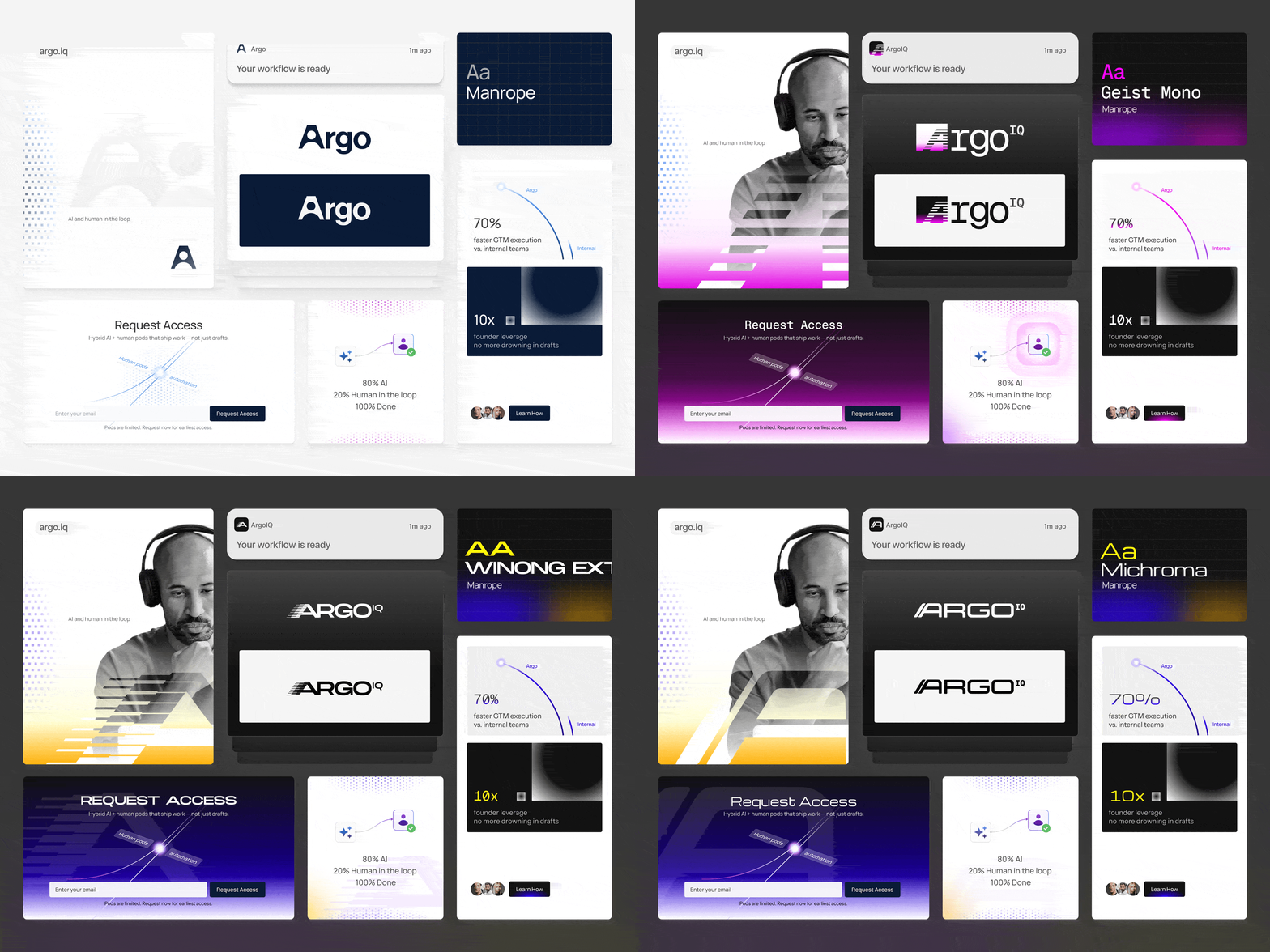
We had very little to work with, and 3 rounds later, we landed on the F1 inspired wordmark, rich magenta hue, and visuals that represent the conjunction of human and AI.
A VC showed up!
The website got paused.
Forum Ventures was in front of them. They needed the deck first.
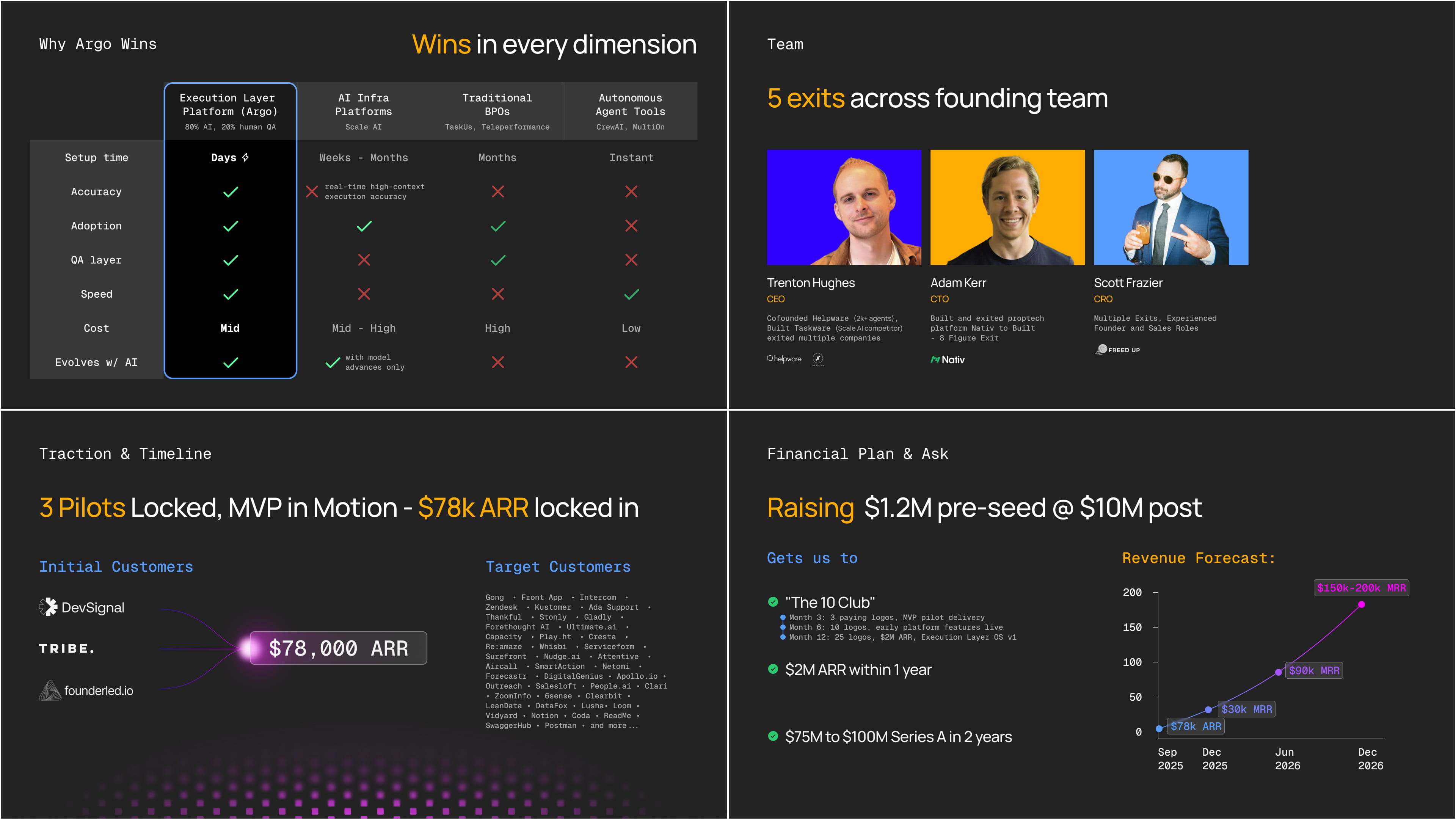
Now the work moved from brand and website into fundraising narrative. Over the next 33 days, we went through 8 major deck iterations.

You go from applying the brand you just created to no more than 7 sections (Landing page) to 14 slides.
That said, the deck became our first proof asset.
Now with a deck and the studio to back them up on quick iterations and alignments between calls, our client sprint.
August to September 2025: Almost 400 deck requests
Pair a great founder with a great deck and the requests start moving fast.
- 110+ deck requests in 2 days.
- 175+ in 3 days.
- 250+ within 2 weeks, with 22 VC meetings set.
- 350+ deck requests and 40+ VC meetings shortly after.
VCs liked the vision but wanted a narrower wedge. “Marketplace” became the immediate focus.
The question shifted from "How do we explain ArgoIQ?" to "How do we make ArgoIQ feel obvious to ONE specific buyer?"
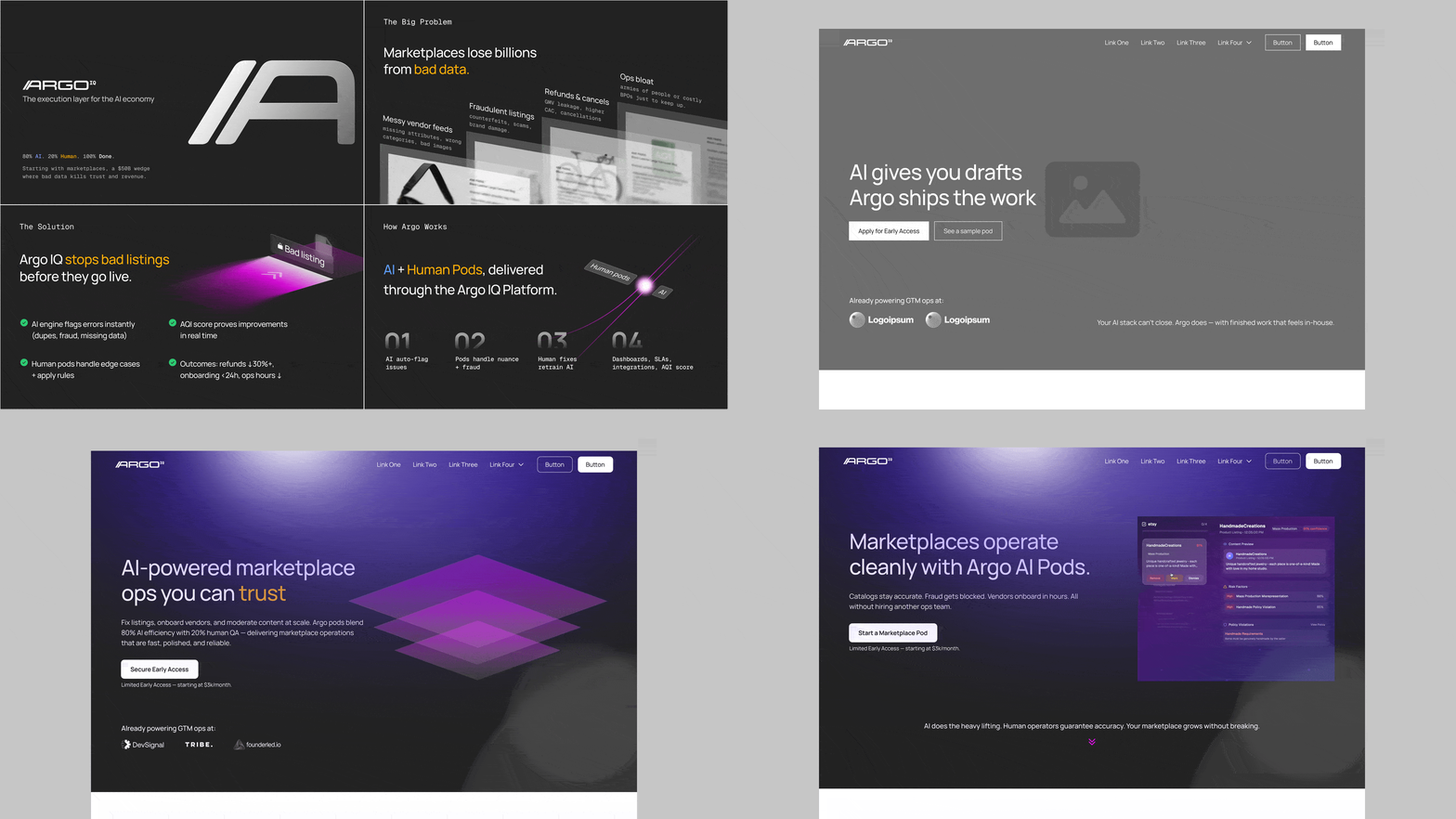
We shipped the marketplace landing page the SAME day we got the note, which leads to "you guys have cemented yourselves as a permanent part of any company I have now and in the future haha. You guys are so good."
November 2025: Accepted into accelerator!
Mid-Nov, ArgoIQ has been accepted into the Forum Ventures accelerator with investment!
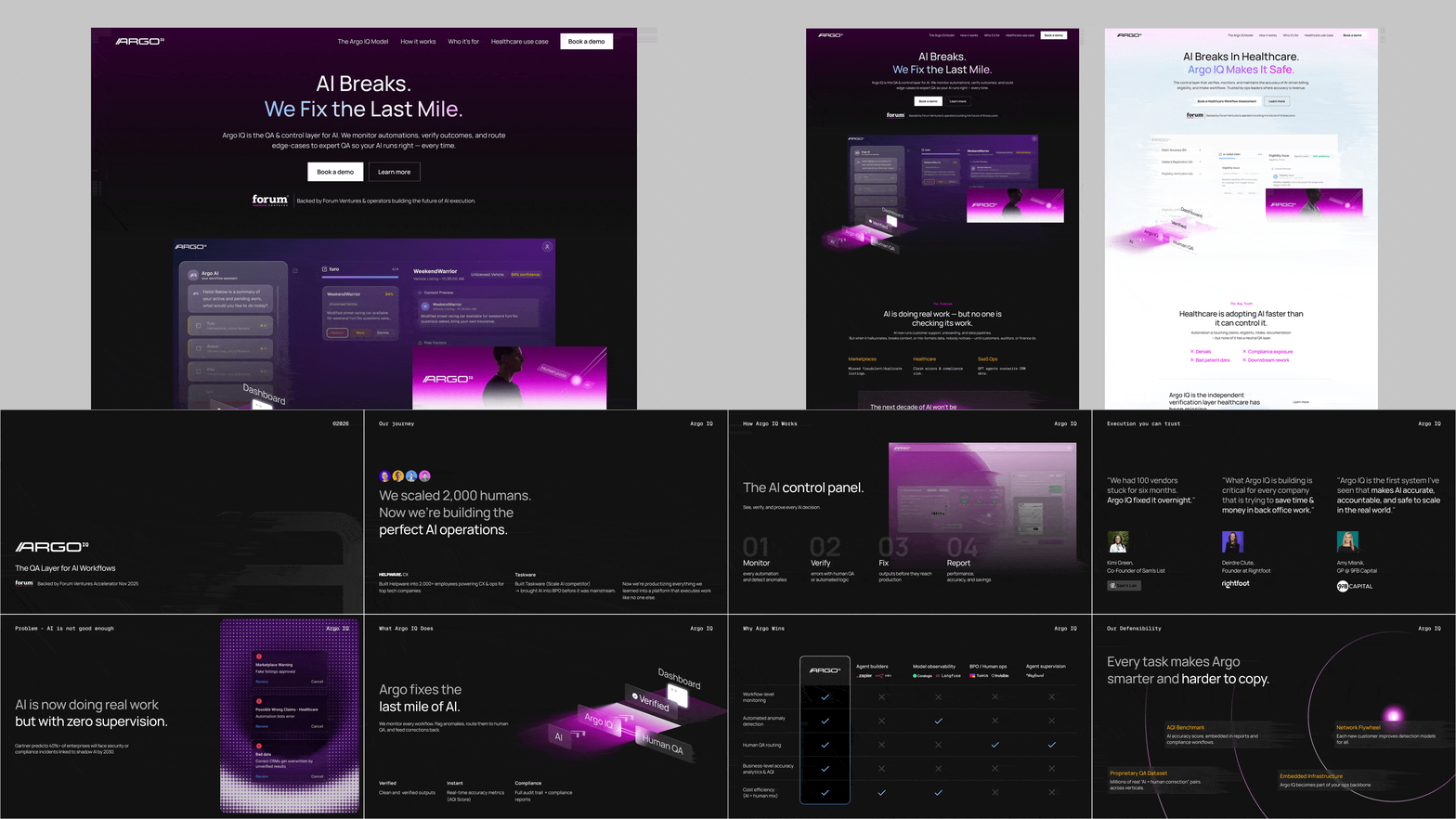
A few days later, we had a new look and feel. Revamped copy. Deck logic pulled into the website. Easily 10x more polished.
Then we wanted to go after a new wedge unlocked with VC connections: Healthcare.
- Main site for the big vision.
- Marketplace page for the wedge.
- Healthcare page for trust, clarity, and vertical resonance.
Homepage lives in 6 days across 5 versions. Healthcare LP from v1 to live in 5 days.

December to January 2026: Demoware for sales
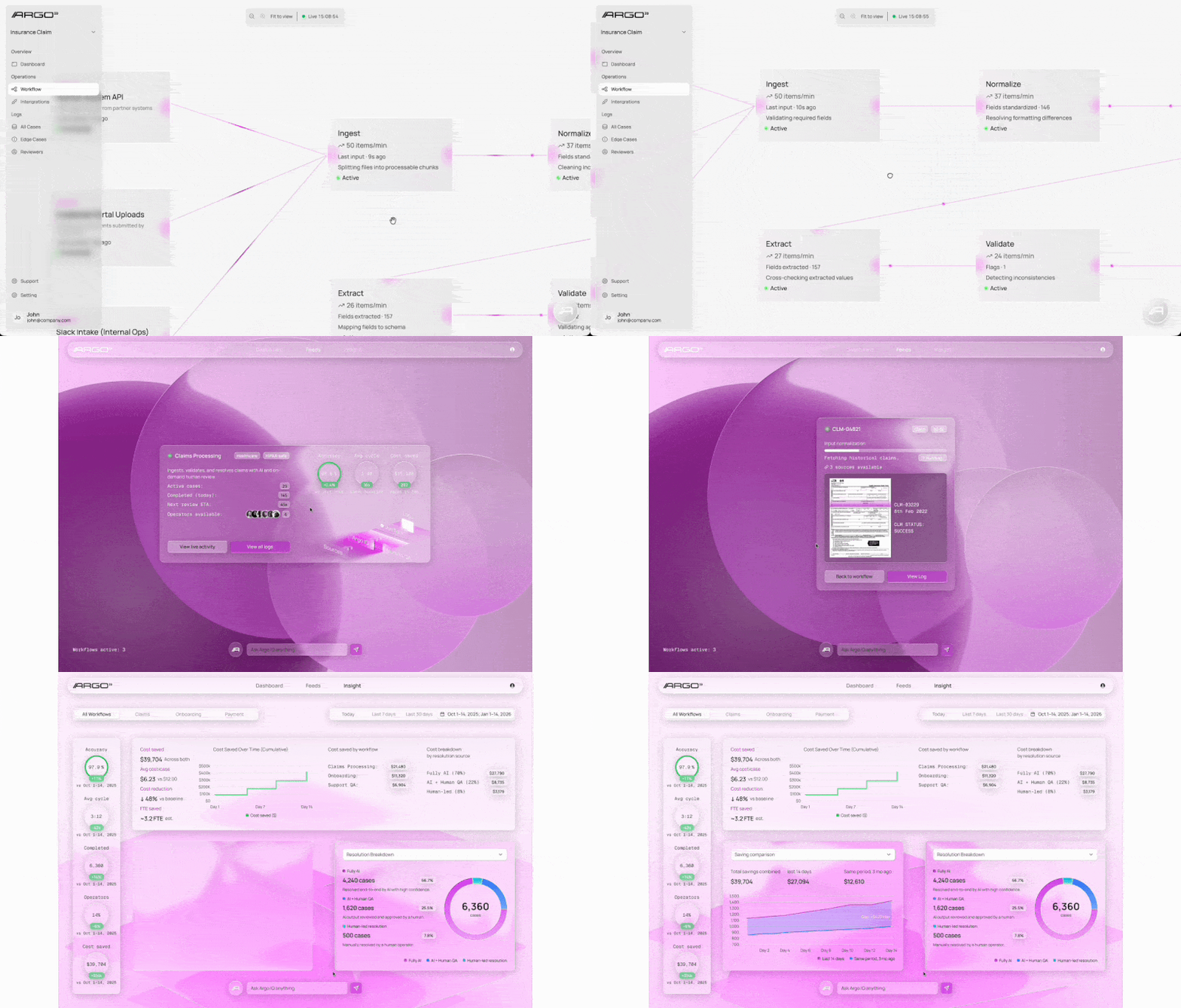
The brief for the demo was simple: "Make Argo feel inevitable."
A demoware that helps their sales process.
The first direction did not land. The client said it looked too much like Figma and not future-forward enough. (P.s. You could sense the client was really into the new Liquid Glass look.)
It needed to show stuff getting done in real time by itself, cases getting escalated. Minority Report style.
In the next 19 days, we literally witnessed how fast technology advanced. Liquid Glass started the project as a Swift-only material, and by week two everyone was vibe coding it on Codex.
We dumped GitHub repo after repo at it, rebuilt the click demo flow in code, and shipped it on Vercel under the title "Surprise" on the third Monday on the Slack channel.
January–February 2026: Product messaging pivot
By now the client has spoken to many investors, prospects, and got a much better sense of what sells.
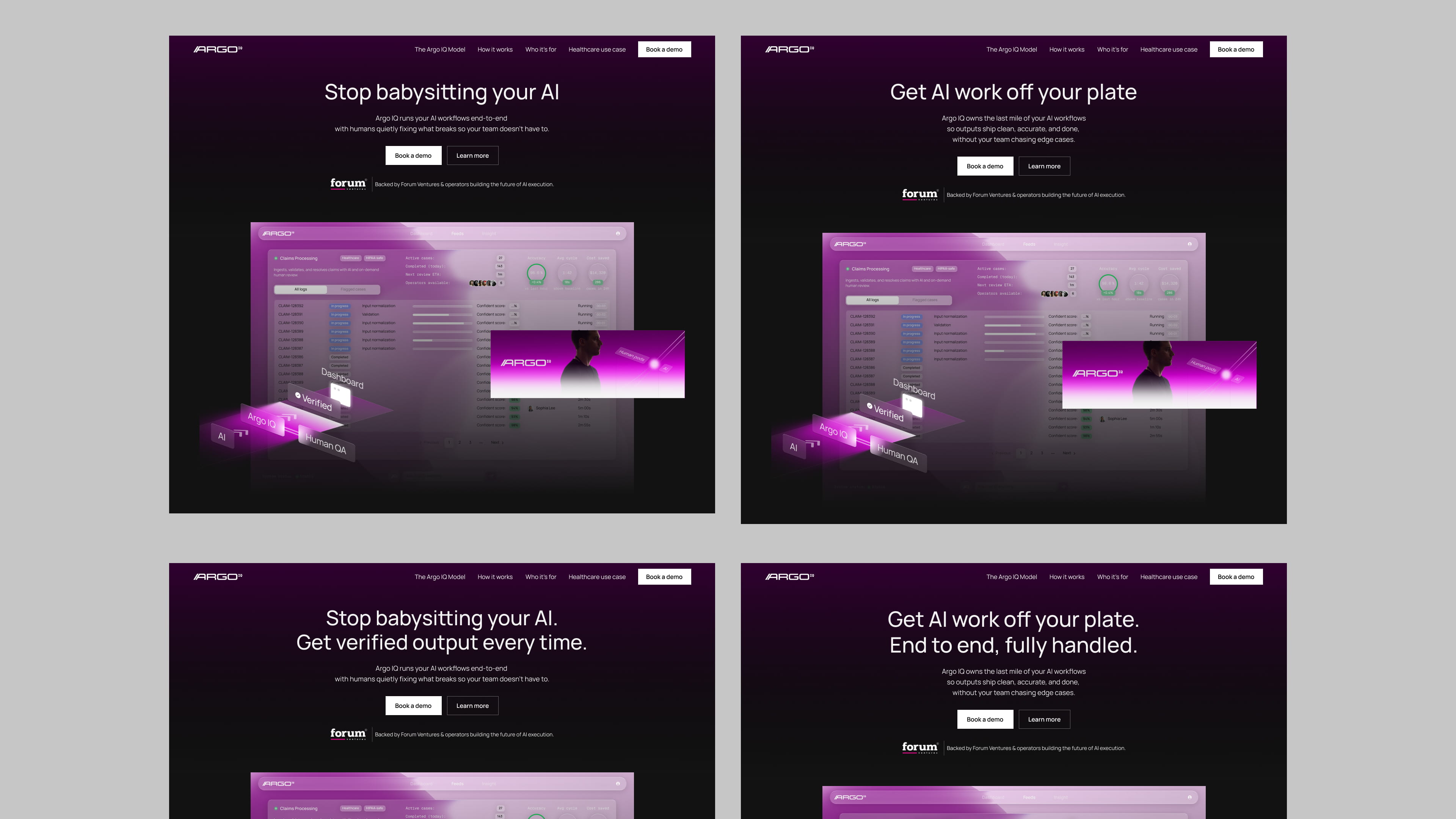
The site copy was leaning into governance language: control, monitor, audit, proof of activity. That made sense for risk buyers. It was not landing for operators.
The next shift on our copywriting was much more emotional.
“Get it off my plate.
Stop managing this.
Stop babysitting your AI.”
The homepage moved from platform explanation into founder self-identification.
February–March 2026: VC check-in
Forum Ventures feedback came in again.
We were underselling, the team, the problem, and even traction.
The positioning was still getting pattern-matched wrong.
The deck got reworked first:
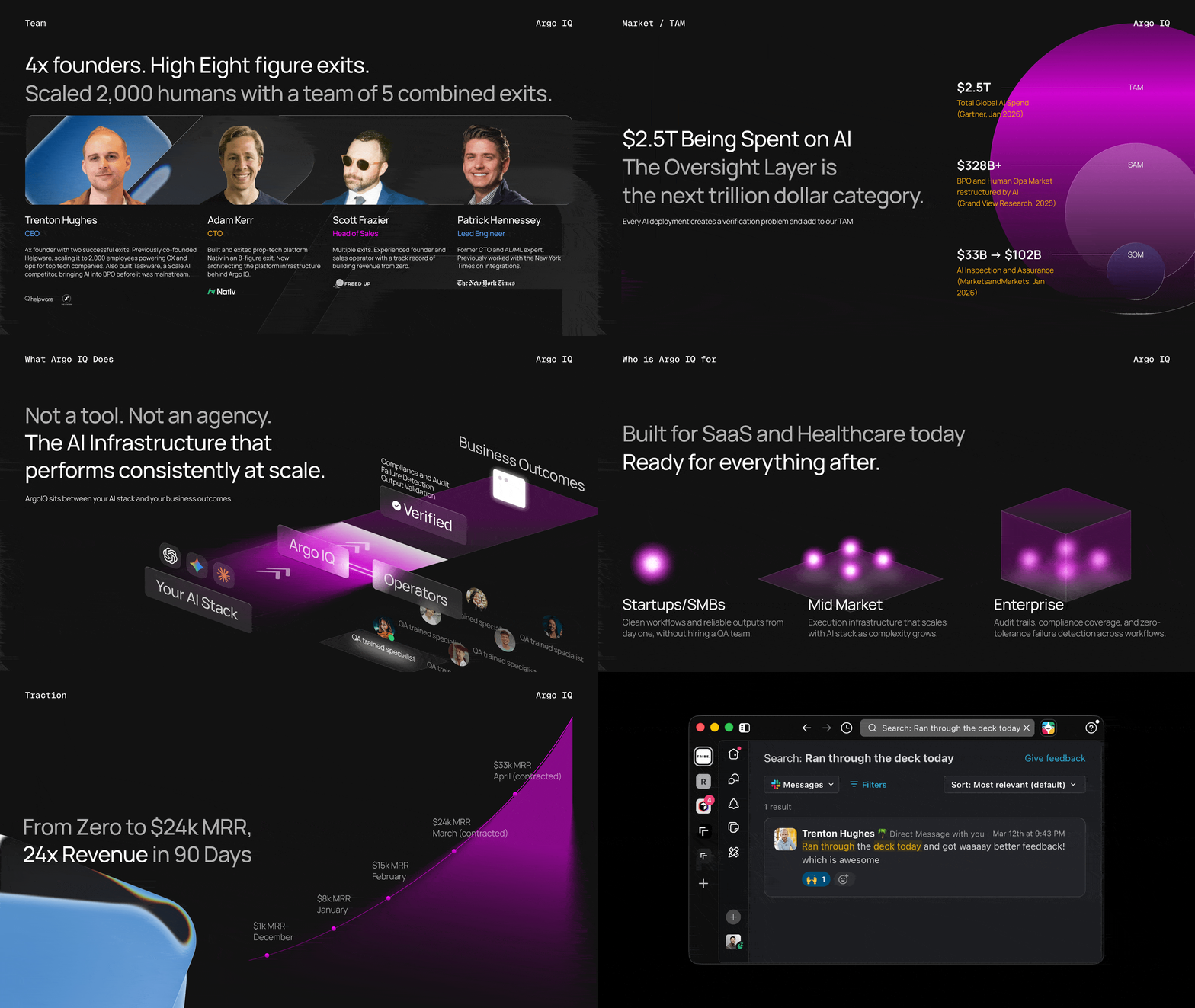
Emphasizing the founding team a bit more, and updating it with latest traction like $1K MRR in December 2025, $24K MRR in March 2026, 10 customers signed, 6 live etc.
It was also when we decided to port the Figma deck fully into code with Codex, and have it be an artifact we could pass Slack updates to and have Codex handle copywriting updates - agentic workflow
Client met again with Forum Ventures on 11 March and the next day:
“Ran through the deck today and got waaaay better feedback! which is awesome. well done!”
Our vision of the deck being a fundraising narrative getting battle-tested in real time was slowly manifesting.
March–April 2026: The luxury of having choices
VC drove 37 investor referrals to the site in March.
Client posted about 69 VC calls over 16 days after Showcase Day.
We're getting real close to seed, from what I heard, it's not that they don't have seed investment opportunities, but they're waiting for better terms. A pretty good and healthy spot to be at for any startups that is essentially 9-months old.
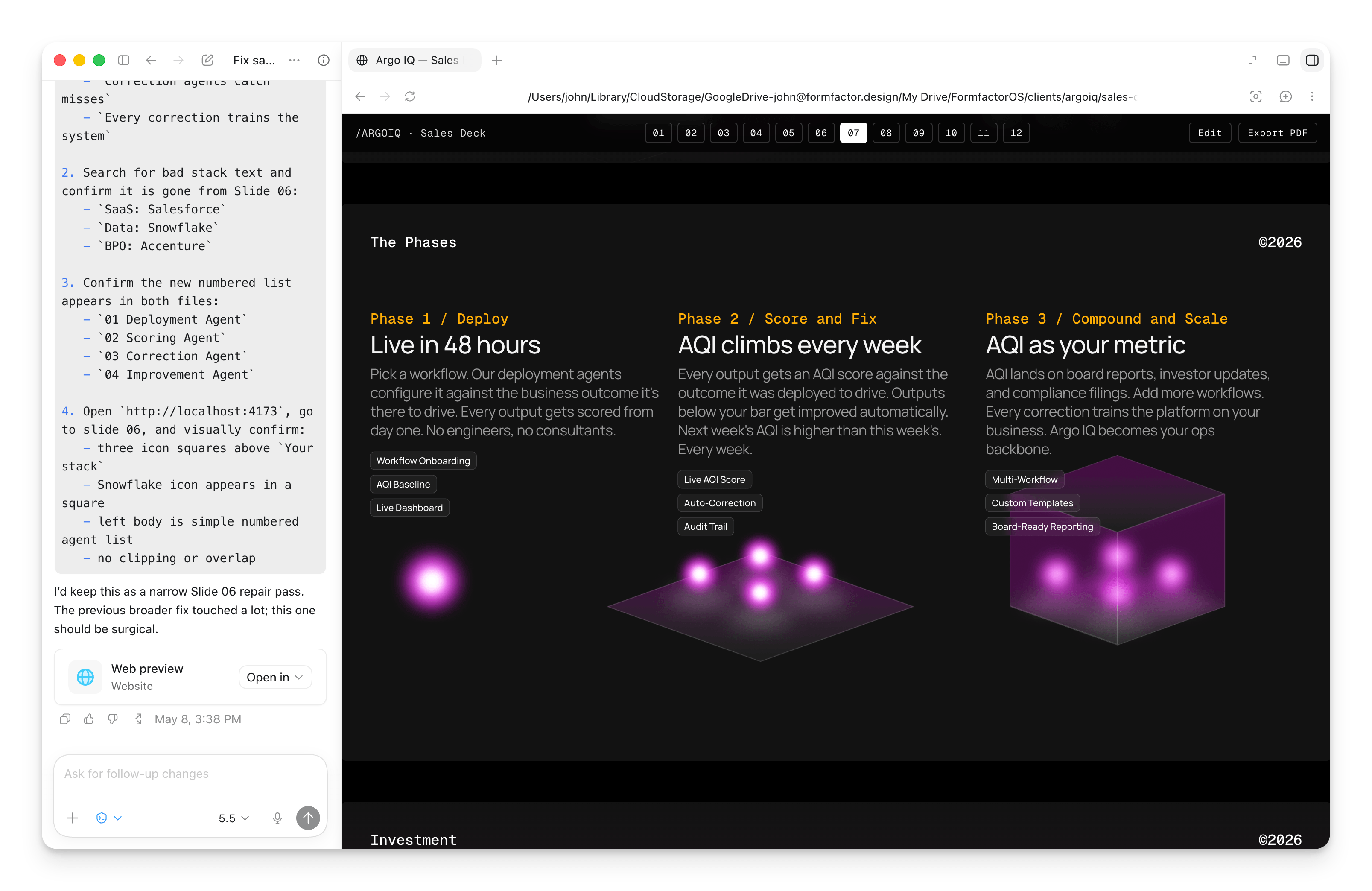
The deck has now moved into Paper MCP rather than pure code, as we still prefer a canvas layer as a creative studio. The site is going through SEO and AEO optimization, and I just hopped off a call with their Head of Revenue strategizing on creating an enterprise-facing sales deck in the coming week as I'm writing this.
- $33K contracted MRR up to April as I write this.
- 11 customers and counting.
- Still with zero paid CAC and churn.
- $150K committed through SAFEs and Forum Ventures.
(Edits: $42K MRR - May)
Closing thoughts: Design is a sales-work wrapper
The brief was a logo and a landing page, but most of what we do is business and sales work in a design wrapper.
Their Head of Revenue told me on a call that when he finished his presentation, he heard the next presenter come up and say, "that's one of the best decks I've ever seen.", without realizing the mic is still on.
As a design studio, it's all about giving your client assets that empower them, give them confidence like celebrities walking down the red carpet in designer clothes. It shows up in sales and pitching.
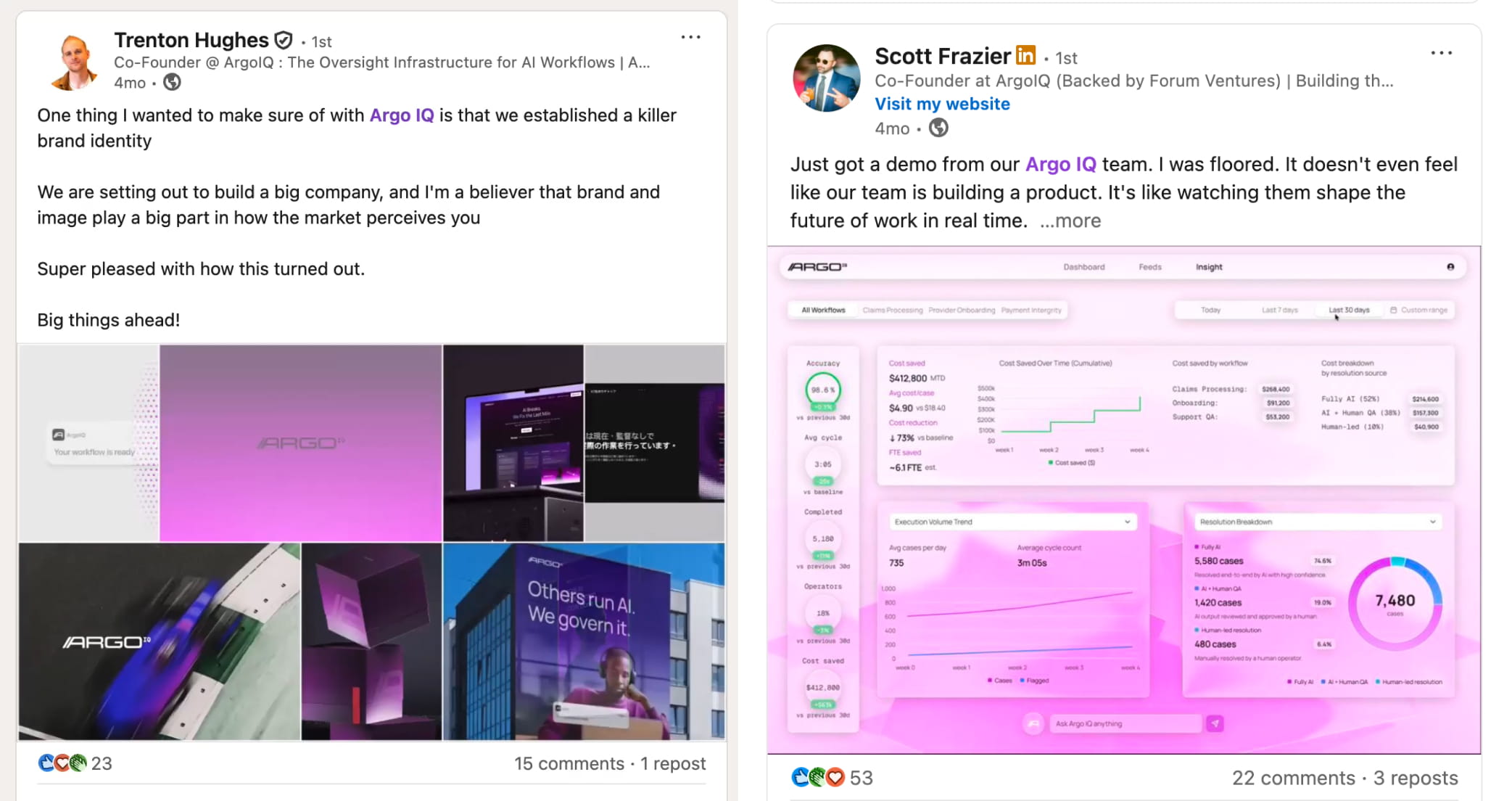
If you're a founder reading this: You pivot all the time, way more than you know you will, and your time is not to be spent on design, or even managing designs - you should spend your time on connections.
No studio/VC can guarantee a silver bullet, but I've seen them pivot with more confidence and conviction every time. If I had to guess, it's because they are in talks with higher up people, billionaires and VC mentors who have played the game before.
And they know they look the best in every room. You can too.

We had over 400 view requests of our deck. Multiple VC offers came from it, and a bunch of angels jumped onboard. Credit is due to the man, the myth the legend - John. Good design goes a long way!